No products in the cart.

Learn what a PO number on an invoice means, where to add it, and how it helps SMBs speed approval, avoid disputes, and get paid faster each time.
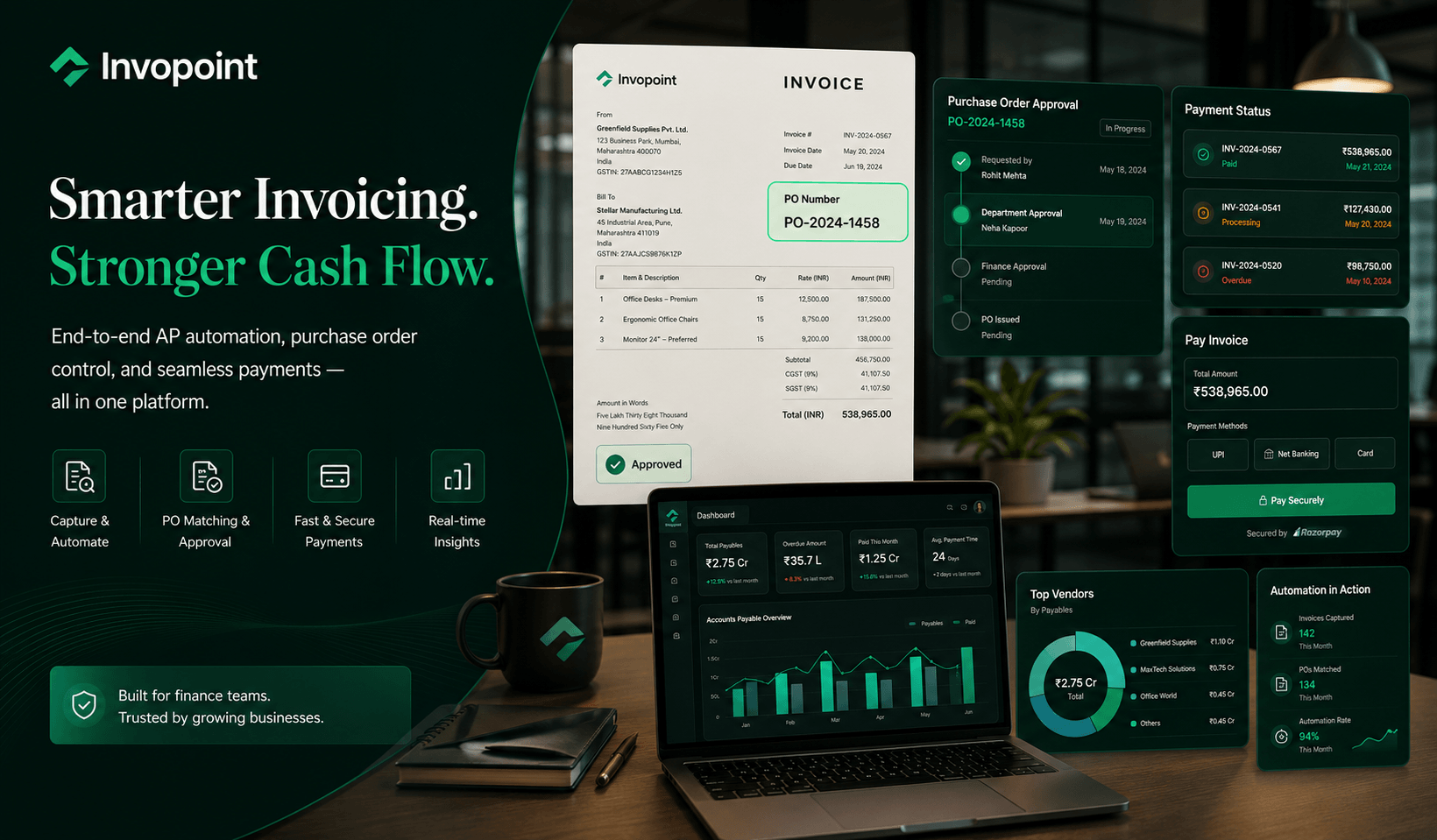
A purchase order, or PO, number is a simple reference that can prevent an otherwise valid invoice from being delayed, rejected, or lost in a customer’s approval workflow. For SMBs, freelancers, agencies, consultants, and suppliers, adding the correct PO number makes invoicing more professional and gives the buyer’s finance team the information it needs to approve payment quickly.
This guide explains what a PO number on an invoice means, when it is required, where to place it, and how invoice automation can make purchase-order billing easier to manage at scale.
A PO number on an invoice is a unique reference assigned by the buyer when they create a purchase order. The supplier includes that same number on the invoice so the customer can match the billed goods or services with the approved order, delivery, budget, and payment record.
Many established businesses, public-sector organisations, accounting firms, and procurement-led companies will only pay invoices that include a valid purchase order number. Their accounts payable team uses it to confirm that the purchase was authorised before releasing funds.
Place the PO number in a clearly labelled field near the invoice number, issue date, payment due date, customer details, or billing address. It should be easy for both the client and their accounts payable software to find.
Use a label such as PO Number, Purchase Order No., or Customer PO. Do not replace your own invoice number with the PO number. They serve different purposes: your invoice number identifies your sales record, while the PO number identifies the customer’s approved purchase.
An invoice number is generated by the supplier and identifies a request for payment. A PO number is generated by the buyer and identifies their authorised order. One purchase order may be linked to one invoice, several invoices, or recurring invoices, depending on the commercial agreement.
You need a PO number when the customer requires one as part of their procurement or payment policy. This is common with larger companies, government bodies, universities, healthcare organisations, construction firms, and businesses with formal purchasing controls.
Always ask for a PO number before starting work when the client mentions a purchase order process. If no PO is required, record the agreement through a signed proposal, contract, estimate, statement of work, or written client approval instead.
Reliable online invoicing software should make it straightforward to add customer references without disrupting the billing workflow. For growing businesses, the most useful features include:
For accounts receivable teams, a missing or incorrect PO number is one of the most avoidable reasons an invoice enters a query queue. Instead of chasing a payment after the due date, confirm the PO at the onboarding, proposal, or order-confirmation stage.
Add the PO number to the client record and verify it again before sending the invoice. If the customer has a maximum PO value, invoice only within the approved amount or request a revised purchase order before billing additional work.
Client billing is more efficient when purchase-order requirements are built into the workflow rather than handled manually at the end of a project. Agencies can link a PO to a campaign or retainer. Consultants can include it on milestone invoices. Contractors can reference it for time-and-materials billing.
For service businesses, make the PO number part of your billing checklist: confirm scope, confirm client legal entity, confirm billing contact, verify PO value, add the PO reference, send the invoice, and track the payment status.
A PO number does not process a payment by itself, but it helps the customer approve the invoice that leads to payment. Once the invoice is authorised, an online payment link can make the final step faster and more convenient.
A digital invoicing platform that lets customers accept online payments can reduce manual bank-transfer follow-up while giving the business clearer visibility into when invoices are settled. This is particularly useful for invoice software for small business teams that need predictable cash flow without a large finance department.
Invoice automation reduces repetitive work, but it must still preserve accurate customer references. Before automating a recurring invoice, check whether the client uses one PO for the full contract term or issues a new PO for each month, quarter, project phase, or financial year.
For recurring services, keep the customer’s PO details up to date and use a clear invoice description. For example: “Monthly advisory services, June 2026, under PO 87452.” This gives the client’s finance team enough context to match the invoice without contacting you for clarification.
A PO number is not a replacement for mandatory invoice information. Businesses in the UK, USA, and Europe should still include the seller and buyer details, invoice number, invoice date, line-item descriptions, quantities, prices, payment terms, and applicable VAT or sales-tax information.
For UK VAT invoicing, include the required VAT details where applicable. For EU cross-border transactions, ensure your invoice reflects the correct VAT treatment. In the USA, sales-tax requirements vary by state and transaction type. A PO number supports internal procurement control, while tax compliance requires the correct financial and legal invoice data.
Freelancers should ask corporate clients whether a PO is required before beginning work. Add it to each project invoice alongside the agreed rate, dates worked, and deliverables. A professional online invoice generator makes this easy without maintaining multiple spreadsheets.
Agencies often receive client POs for retainers, campaigns, media spend, creative production, and project milestones. Use the correct PO reference on every relevant invoice and avoid charging beyond the approved budget without written confirmation.
Consultants can use a PO number to connect invoices with a statement of work, retainer agreement, or approved consulting engagement. It is especially useful when the invoice is paid by a finance team rather than the individual stakeholder who commissioned the work.
Suppliers should match the PO number with the customer name, delivery location, line items, and order value. This helps prevent partial-delivery, quantity, and pricing disputes during invoice matching.
The best PO number invoice process is one that captures the customer’s approved PO before work begins, stores it with the client or project record, displays it clearly on every relevant invoice, and tracks payment after sending. An invoicing platform such as Invopoint helps SMBs combine professional invoice creation, client billing, invoice tracking, and secure online payments in one workflow.
No. A PO number is only required when the customer’s purchasing policy or contract requires it. However, if a client provides a PO number, include it on the invoice to avoid payment delays.
Yes, many businesses pay invoices without purchase orders. However, organisations with structured procurement controls may reject or delay an invoice until a valid PO is provided.
The buyer creates the PO number when their purchasing or procurement team approves an order. The seller should copy that number exactly onto the invoice.
Yes. A single PO may cover a retainer, a phased project, or multiple deliveries. Confirm the available value and terms before submitting each invoice against it.
Ask whether a PO is required. If not, keep written proof of the agreed work, price, payment terms, and client approval before issuing the invoice.
A PO number supports the buyer’s internal approval process, but it does not replace the legal, tax, or contractual requirements that apply to your invoice and agreement.
Yes. If the invoice has not been paid, update it promptly, resend the corrected version, and notify the client’s accounts payable contact.
A PO number is a small invoice field with a meaningful effect on payment speed, buyer confidence, and accounts receivable control. By collecting the PO before billing and adding it accurately to every relevant invoice, your business can reduce payment queries and operate with a more reliable client billing process.
Use Invopoint as your cloud invoicing platform to create professional invoices, manage client billing references, track payment status, and simplify the path from approved work to paid invoice.

 Anton Liashenko
Apr 17, 2024
 Anton Liashenko
Apr 24, 2024
 Anton Liashenko
Nov 17, 2023
 Anton Liashenko
Nov 13, 2023
 Anton Liashenko
Nov 08, 2023