No products in the cart.

Learn how to launch and grow a profitable clothing business in 2026 with modern ecommerce, branding, invoicing, and payment tools.
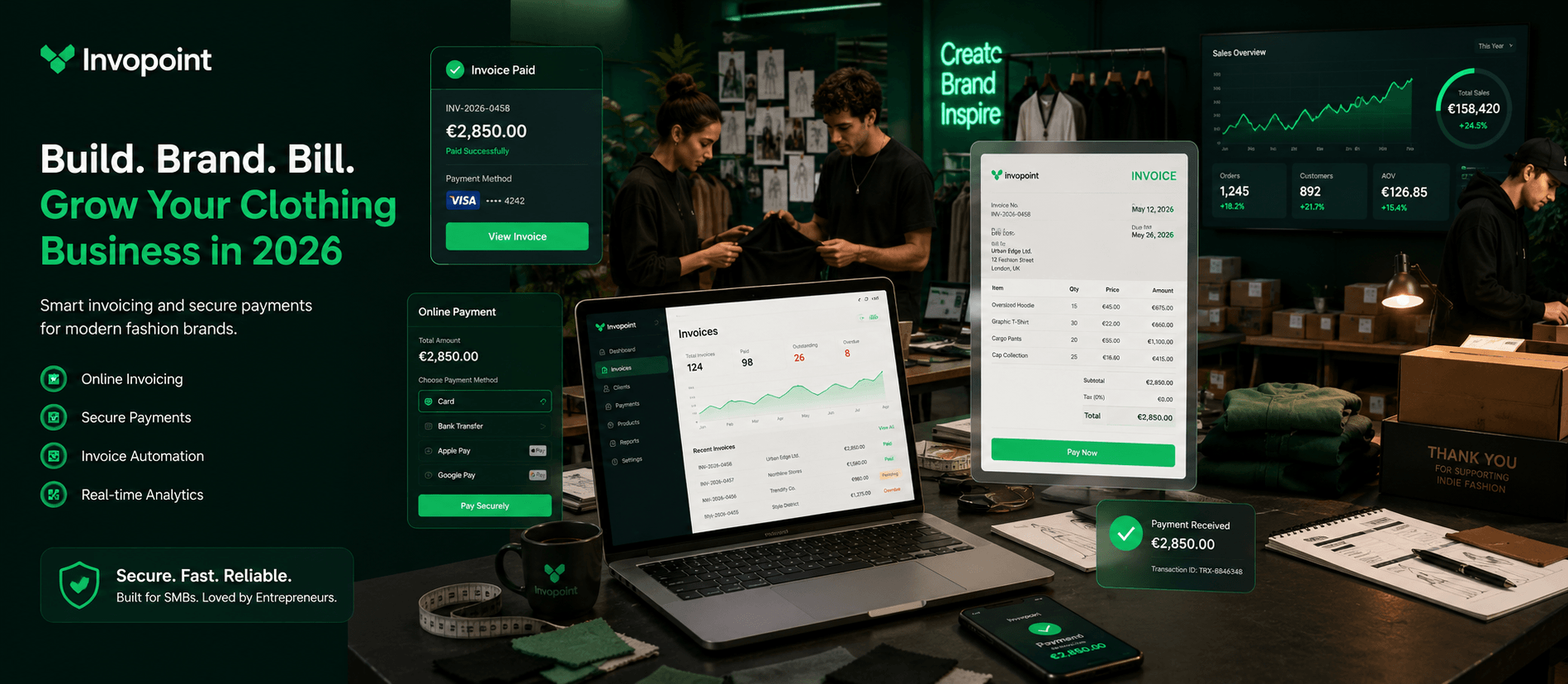
Starting a clothing business in 2026 is more accessible than ever. Ecommerce platforms, social media marketing, print-on-demand services, and online invoicing software allow entrepreneurs to launch fashion brands with lower upfront costs and faster market entry.
Whether you want to build a streetwear label, luxury fashion brand, activewear company, or niche apparel store, success now depends on branding, operational efficiency, customer experience, and strong financial management.
The global fashion industry continues to evolve rapidly across the USA, UK, and Europe. Consumers increasingly buy clothing online, creating opportunities for small brands that can move faster than traditional retailers.
Before launching, define the type of clothing business you want to build.
Print-on-demand allows businesses to sell custom apparel without holding inventory. Products are manufactured only after customer orders are placed.
Private label brands work directly with manufacturers to produce unique apparel collections under their own brand identity.
Independent designers often create custom garments, limited collections, or handmade fashion products for niche audiences.
Wholesale businesses purchase products in bulk and distribute them to retailers or online marketplaces.
Branding plays a critical role in fashion ecommerce success. Customers often buy based on identity, lifestyle alignment, and emotional connection rather than product specifications alone.
Your website, packaging, invoices, and payment experience should all reinforce a premium and trustworthy brand image.
Modern ecommerce platforms make it possible to launch online stores quickly. Your store should focus on mobile usability, fast checkout experiences, and secure payment processing.
Important ecommerce features include:
Using invoice software for small business helps clothing brands automate invoicing, manage customer payments, and improve cash flow visibility.
Many fashion startups fail because operational processes become disorganised as sales increase. Modern brands need reliable systems for invoicing, payment tracking, and financial management.
Using a cloud invoicing platform helps businesses:
Fashion marketing increasingly depends on short-form content, influencer collaborations, and community building.
Platforms like Instagram, TikTok, Pinterest, and Threads continue driving apparel sales through visual storytelling and creator-driven discovery.
Micro-influencers often generate stronger engagement rates than celebrity partnerships while remaining more affordable for SMB clothing brands.
Email campaigns remain highly effective for abandoned carts, product launches, and customer retention.
Publishing SEO-focused blog content can help clothing businesses generate organic traffic and improve long-term brand visibility.
Startup costs vary depending on the business model, manufacturing approach, and marketing strategy.
Typical clothing business expenses include:
Automation allows clothing businesses to scale operations without dramatically increasing administrative workload.
Modern fashion brands increasingly rely on:
Using invoice automation software helps reduce manual processes while improving operational efficiency.
Starting a clothing business in 2026 requires more than good product ideas. Modern fashion brands must combine branding, ecommerce execution, operational systems, and customer experience into one scalable business model.
Using tools like online invoice generators and secure online payment solutions helps fashion startups operate more efficiently while building stronger financial workflows from day one.

 Anton Liashenko
Apr 17, 2024
 Anton Liashenko
Apr 24, 2024
 Anton Liashenko
Nov 17, 2023
 Anton Liashenko
Nov 13, 2023
 Anton Liashenko
Nov 08, 2023